How I Conquered Rheumatoid Arthritis – Part 8

Fasting was pivotal in my journey to healing rheumatoid arthritis, as well as my two other autoimmune conditions: Graves’ disease and Sjögren’s syndrome.
I explained in Part 4 how I was trying to add a lot of foods considered “healthy” to my diet, hoping to turn things around during the first months when I was attempting to heal naturally, after taking my first dose of methotrexate, which had made me feel really, really unwell. Unfortunately, my efforts in those first months after the diagnosis hadn’t paid off, because I was still missing a lot of knowledge.
I started to realise that I often had flares because of what I ate (on top of fatigue or lack of sleep). In terms of food, I noticed that whenever I ate even a little meat (even good-quality meat), something a bit too sweet, or something fried, it triggered an almost instant flare. I understood these weren’t the most anti-inflammatory foods, and I’d actually already eliminated most of them from my diet months earlier, but I couldn’t understand why my body was reacting so strongly. It was as if my immune system was screaming that it was pissed off! I told myself that maybe I needed to eat less, to abstain for long periods, to really flush the toxicity out of my body and get back to a life where I could eat meat or have the occasional treat, even rarely, without systematically paying for it with joint pain.
I realised this was exactly what I needed, because I was starting to fully understand that I was inflamed at the deepest level, and that it was as if I needed to rebuild myself at the cellular level.
I started researching fasting, and I discovered Mindy Pelz and Dr Pradip Jamnadas, along with the fascinating facts they explained about fasting, particularly around cellular regeneration.
Dr Mindy Pelz, who wrote Fast Like a Girl, is so passionate, and learning from her about the effects of fasting on the body, almost hour by hour, is what convinced me!
On the other hand, Dr Jamnadas is raw and very direct about the diseases of the modern world, and explains so well how we, as humans, have strayed from the lifestyle suited to our original physiology, which hasn’t changed: we’re built to have periods of eating and periods without food. He explains that today, never stopping eating is at the root of many diseases, because our insulin stays constantly elevated when we eat non-stop. He has helped many of his metabolically unhealthy patients regain their health through fasting alone.
So I started fasting (water fast), first 24 hours, then 48 hours, and up to 72 hours on some weekends. It wasn’t easy, and I was being watched over: my husband and my children were there, and on top of that, my mum and mother-in-law were visiting at the time, so I had every condition in place to fast for long periods without unnecessary risk.
I want to mention that long, multi-day fasts like the ones I did aren’t for everyone. I didn’t have an eating disorder such as anorexia or bulimia, nor was I underweight or frail, so I could allow myself to do this, and above all, I wasn’t alone. I don’t recommend long fasting as a default for everyone, especially if you’re taking medication; each person’s unique situation needs to be considered before confirming whether fasting is appropriate for them.
That said, resting the digestive system is important. The minimum I recommend for any adult is to go 12 hours without eating, which includes the night, so it’s very easily achievable, but unfortunately, that isn’t the case for a lot of people. When you go 12 hours without eating, or even a few hours more, like 14 or 16, you really allow your body to cleanse and repair itself¹.
With fasts of 24 hours or more, like the ones I did, I wanted to enter a state of autophagy.
This phenomenon was described by Japanese researcher Yoshinori Ohsumi, who won the Nobel Prize for discovering the mechanisms of autophagy². Autophagy means that when the body has nothing left to eat, it starts to “eat” itself, beginning with defective and cancerous cells³. It also produces growth hormones to regenerate, and therefore rejuvenate, itself⁴.
At first, I felt hungry, and the hardest part for me was the night: falling asleep hungry, but praying for the disease to leave. I was determined; I’d had a life before this illness, a life without pain, and I wanted to do everything I could to get it back.
What I also realised during these long fasts is that just by drinking water, and even though I wasn’t eating anything, I kept having bowel movements. I would wonder: but where is this coming from, I haven’t eaten in two days?
This was part of my detoxification, because I would learn later that in the case of autoimmune diseases like rheumatoid arthritis, it’s very often about deep-seated buildup in the body. You have to succeed in detoxifying, in eliminating these toxins. Bowel movements are one of the most important ways to eliminate them. Some people can go to the toilet every day, yet still have stool stuck in the colon dating back months, even years.
During these fasting days, I kept feeling pain in my fingers, which had been swollen for months because of the rheumatoid arthritis. I liked to imagine it was the toxins escaping from my joints, and that this was the pain I was feeling.
I don’t know if that was really the case, but what’s certain is that after several weeks of intermittent fasting (because when I wasn’t fasting for 24 hours, I was fasting for at least 14 to 16), I started to feel better.
It’s worth knowing that I was also eating much better by then, and I had also cleaned up the products and materials I used for cooking. I’ll come back to that, but the importance of the quality of the air we breathe, the water we drink, and the materials we cook with shouldn’t be underestimated, because all of it impacts our health.
As my health improved, I felt like I was being reborn; I felt so much better in my body, in my mind, I was getting my energy back.
What’s a little funny looking back is that people noticed my physical transformation and would say: “You’ve lost weight!” or “You’re glowing, what are you doing?”
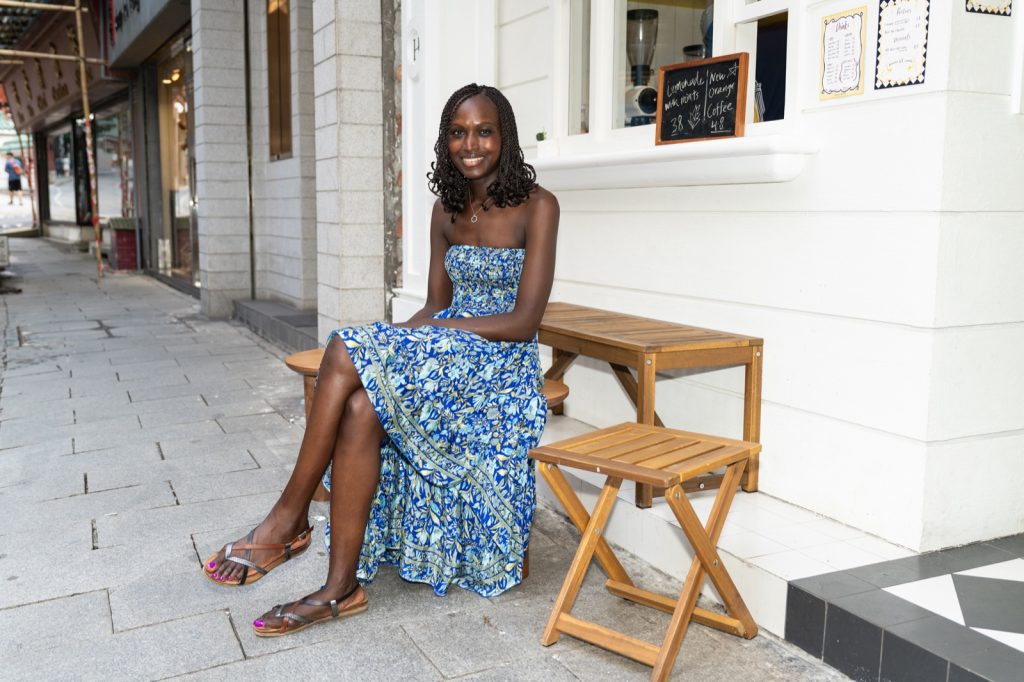
And I wanted to say: “I’m fasting because I’m sick, I’m fasting to survive.”
But I would just smile, and I understood that what I was doing seemed to be working, I was regenerating and rejuvenating myself, perhaps to fully heal.
Here’s a photo of what I looked like at the time, taken during our last days in Hong Kong, before I moved with my family to New Jersey in the United States.
In the upcoming Part 9 of my story, I’ll explain what I combined my fasting with to really accelerate my healing.
References
¹ Schuppelius, B., Peters, B., Ottawa, A. and Pivovarova-Ramich, O. (2021) ‘Time Restricted Eating: A Dietary Strategy to Prevent and Treat Metabolic Disturbances’, Frontiers in Endocrinology, 12, article 683140.
² The Nobel Assembly at Karolinska Institutet (2016) The Nobel Prize in Physiology or Medicine 2016 — Yoshinori Ohsumi.
³ White, E. (2012) ‘Deconvoluting the context-dependent role for autophagy in cancer’, Nature Reviews Cancer, 12(6), pp. 401–410.
⁴ Ho, K.Y. et al. (1988) ‘Fasting enhances growth hormone secretion and amplifies the complex rhythms of growth hormone secretion in man’, Journal of Clinical Investigation, 81(4), pp. 968–975.

FREE
Book your free clarity call
A 1-hour conversation where I take the time to understand your current health situation, get clear on your health objectives, and share what's your smartest next steps to improve your health.
This article is for educational purposes only and is not a substitute for personalised medical advice. Please consult a qualified healthcare practitioner before making changes to your diet, supplements, or lifestyle, especially if you are pregnant, breastfeeding, or managing a medical condition.