38 Trillion Bacteria Are Living in Your Gut. Here Is What They Are Actually Doing.
There was a day when everything changed for me in terms of how I see health. It was the moment it became absolutely clear that naturopathy and functional medicine were areas I would want to work in for the rest of my life, because the more you learn, the more fascinating it gets.
What was my “aha” moment?
It was the day I discovered how the bacteria living in your gut can make or break your health, and how they can actually turn against you if you stop taking care of them.
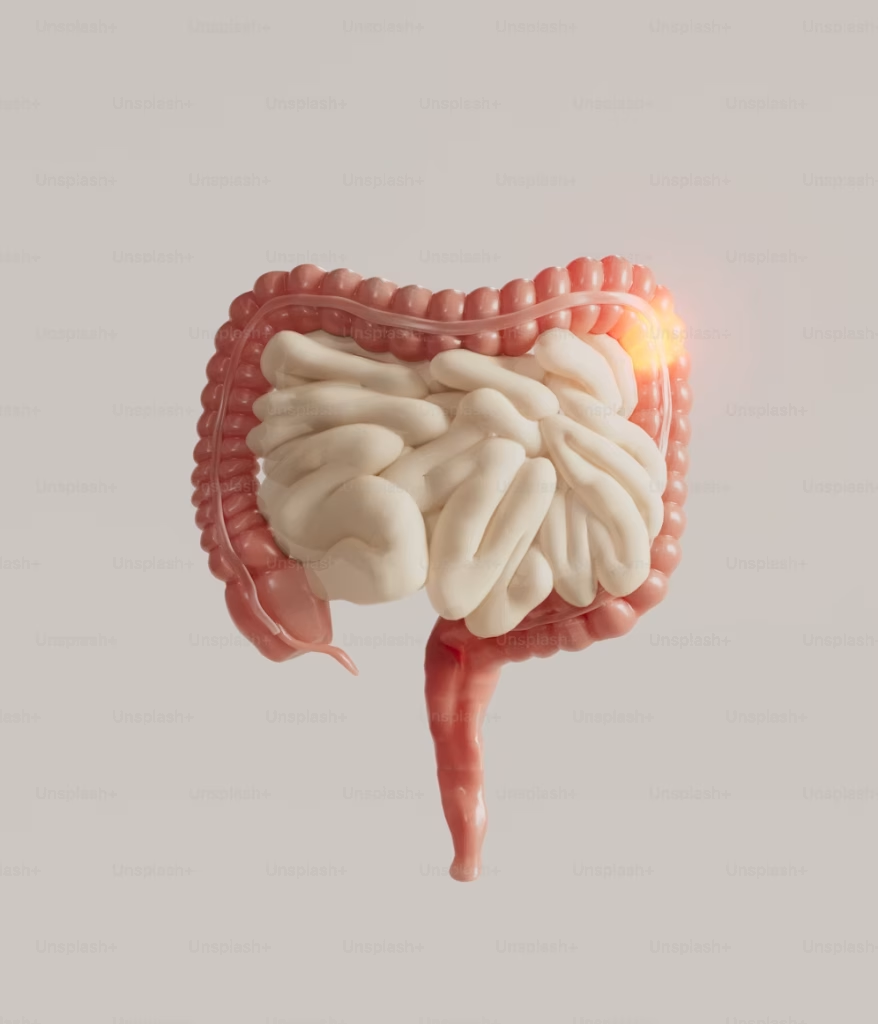
You Have an Entire Ecosystem Living Inside You
Did you know that you have around 38 trillion bacteria living in your gut? That is more bacterial cells than you have human cells in your entire body.¹ And far from being passive passengers, these microorganisms are actively involved in almost every aspect of your health.
The research of the past two decades has transformed our understanding of the microbiome. Here is what we now know your gut bacteria are doing for you every single day:
- Keeping your intestinal lining strong, which, as you will see shortly, is one of the most important jobs in your body
- Fermenting dietary fibre into short-chain fatty acids (such as butyrate, acetate and propionate), which actively reduce inflammation throughout the body²
- Influencing satiety hormones such as GLP-1 and PYY, helping you feel full and reducing the risk of overeating³
- Synthesising essential vitamins, including vitamin K and several B vitamins⁴
- Producing neurotransmitters, including serotonin. Around 90 to 95% of the body’s serotonin is produced in the gut, where it plays a key role in regulating mood, relaxation and pain signalling⁵
- Communicating directly with your brain. Your gut and brain are connected through the vagus nerve, and approximately 80 to 90% of the signals travelling along this nerve go from the gut up to the brain, not the other way around.⁶ For every one message your brain sends down to your gut, your gut sends eight to nine messages back. This is why what you eat and the state of your microbiome directly affects your mood, mental clarity and cognitive function.
- Training your immune system, and this one is arguably the most important of all.
Your Gut Is the Headquarters of Your Immune System
Around 70 to 80% of your immune system is located in your gut, within a network of immune tissue called the gut-associated lymphoid tissue, or GALT. This is not a coincidence. Your gut is the primary point of contact with everything from the outside world, whether through the food you eat or the air you breathe. Your gut bacteria are strategically positioned there, constantly sampling what comes through and educating your immune cells.
In simple terms, they act as trainers; they constantly talk to your immune cells:
“This molecule is fine, do not react to it in future.”
“This one is a threat. Destroy it, remember it, and be ready to act faster next time.”
This sophisticated training system only works well when you have a healthy microbiome, with a good balance of beneficial bacteria outnumbering the harmful ones.
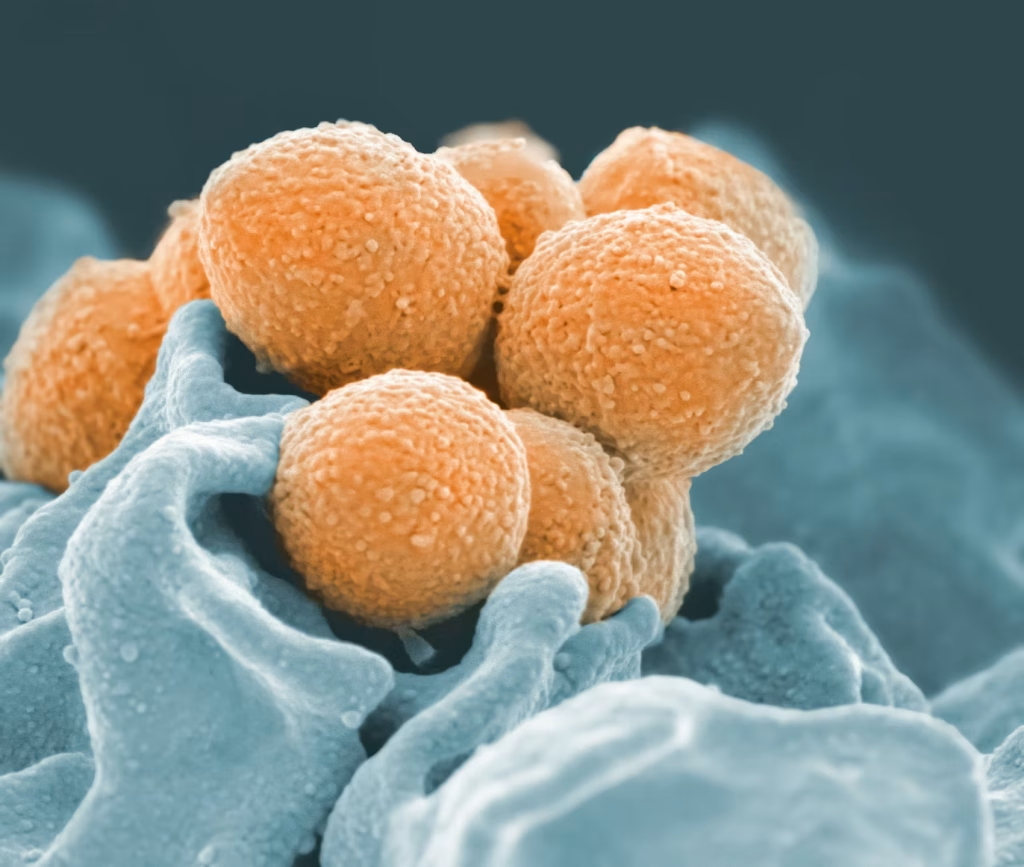
How Do You Build a Healthy Microbiome?
You are not born with an empty gut. You inherit your first microbiome from your mother during birth and through breastfeeding if you have been breastfed. The way you were born (vaginal delivery or C-section) and fed (breastfeeding or bottle-fed) positively or negatively impact your microbiome, as well as recurrent antibiotics, but that alone doesn’t determine your fate. Every day, what you eat, how you live, and even how you think all influence the composition of your microbiome.
Fermented foods such as kefir, kimchi, sauerkraut and live yoghurt (when tolerated) are a practical way to introduce beneficial bacteria. Quality probiotic supplements can also help, but here is something many people miss: good bacteria cannot survive without fibre. Fibre is their food, and without it, even the best probiotic will not make a lasting difference.
The single most effective strategy for a thriving microbiome is diversity. Eating a wide variety of plant foods, vegetables, legumes, wholegrains, fruits, nuts and seeds provides the range of fibre and polyphenols that different bacterial species need to flourish. Research suggests that people who eat 30 or more different plant foods (this includes nuts, seeds, herbs and spices) per week have significantly more diverse microbiomes than those who eat fewer.7
What Happens When You Stop Feeding Your Good Bacteria?
This is where things get serious.
When beneficial bacteria are not getting enough fibre to feed on, they start feeding on the next available source: the mucus layer lining your intestinal wall. Over time, this degrades the gut barrier and leads to what is known as intestinal hyperpermeability, or leaky gut.8 Once the gut lining is compromised, partially digested food particles, bacteria and toxins can pass into the bloodstream. This puts the immune system under constant pressure and has been linked to a wide range of chronic conditions, including autoimmune disease, type 2 diabetes, inflammatory bowel disease and neurological symptoms such as brain fog.8,9
The Good News: It Is Never Too Late
Here is what I find endlessly hopeful about all of this. Your body is not static. It is always regenerating, always looking for an opportunity to repair itself:
- Your stomach lining regenerates every 3 to 5 days
- Your gut lining regenerates every 3 to 7 days
- Your red blood cells renew approximately every 120 days
- Your skin regenerates every 4 to 6 weeks
Nature is giving us many ways to make it right and heal. With the right nutritional and lifestyle changes, you can rebuild a healthy microbiome. I did it myself, and I have seen it happen in people I have helped.
I know it can feel overwhelming to know what to do in a world full of conflicting health information. But this is what I want you to take away: your body is always on your side. It is taking every available opportunity to heal. Your job is simply to give it the right conditions to do so.
This is what I realised when going through my healing journey myself.
References
¹ Sender, R., Fuchs, S. and Milo, R. (2016) ‘Revised estimates for the number of human and bacteria cells in the body’, PLOS Biology, 14(8), e1002533.
² Shin, Y., Han, S., Kwon, J., Ju, S., Choi, T.G., Kang, I. and Kim, S.S. (2023) ‘Roles of short-chain fatty acids in inflammatory bowel disease’, Nutrients, 15, 4466.
³ Zeng, Y., Wu, Y., Zhang, Q. and Xiao, X. (2023) ‘Crosstalk between glucagon-like peptide 1 and gut microbiota in metabolic diseases’, mBio, 15, e02032-23.
⁴ Tarracchini, C., Lugli, G.A., Mancabelli, L., van Sinderen, D., Turroni, F., Ventura, M. and Milani, C. (2024) ‘Exploring the vitamin biosynthesis landscape of the human gut microbiota’, mSystems, 9, e00929-24.
⁵ Grondin, J.A. and Khan, W.I. (2023) ‘Emerging roles of gut serotonin in regulation of immune response, microbiota composition and intestinal inflammation’, Journal of the Canadian Association of Gastroenterology, 7(1), pp. 88–96.
⁶ Breit, S., Kupferberg, A., Rogler, G. and Hasler, G. (2018) ‘Vagus nerve as modulator of the brain–gut axis in psychiatric and inflammatory disorders’, Frontiers in Psychiatry, 9, 44.
⁷ McDonald, D. et al. (2018) ‘American Gut: an open platform for citizen science microbiome research’, mSystems, 3(3), e00031-18.
8 Fasano, A. (2012) ‘Leaky gut and autoimmune diseases’, Clinical Reviews in Allergy and Immunology, 42(1), pp. 71–78.
9 Cani, P.D. (2018) ‘Human gut microbiome: hopes, threats and promises’, Gut, 67(9), pp. 1716–1725.

FREE
Book your free clarity call
A 1-hour conversation where I take the time to understand your current health situation, get clear on your health objectives, and share what's your smartest next steps to improve your health.
This article is for educational purposes only and is not a substitute for personalised medical advice. Please consult a qualified healthcare practitioner before making changes to your diet, supplements, or lifestyle, especially if you are pregnant, breastfeeding, or managing a medical condition.